
Cold email doesn’t need to sound clever. It needs to feel relevant, easy to understand, and worth answering.
That sounds simple, yet many campaigns still fail because they start with the sender rather than the recipient. Long product introductions, vague promises, generic personalization, and aggressive meeting requests make it difficult for busy buyers to understand why they should care.
This guide looks at the patterns that consistently make cold outreach stronger: relevance, clear positioning, useful personalization, low-friction calls to action, thoughtful follow-up, and better account selection. The 10,000-email analysis is used as a practical framework rather than a claim that one subject line or template produces a universal reply rate.
Technology matters too. The right platform can help teams identify warmer accounts, understand website behavior, connect CRM context, and prepare more relevant outreach before another email is sent.
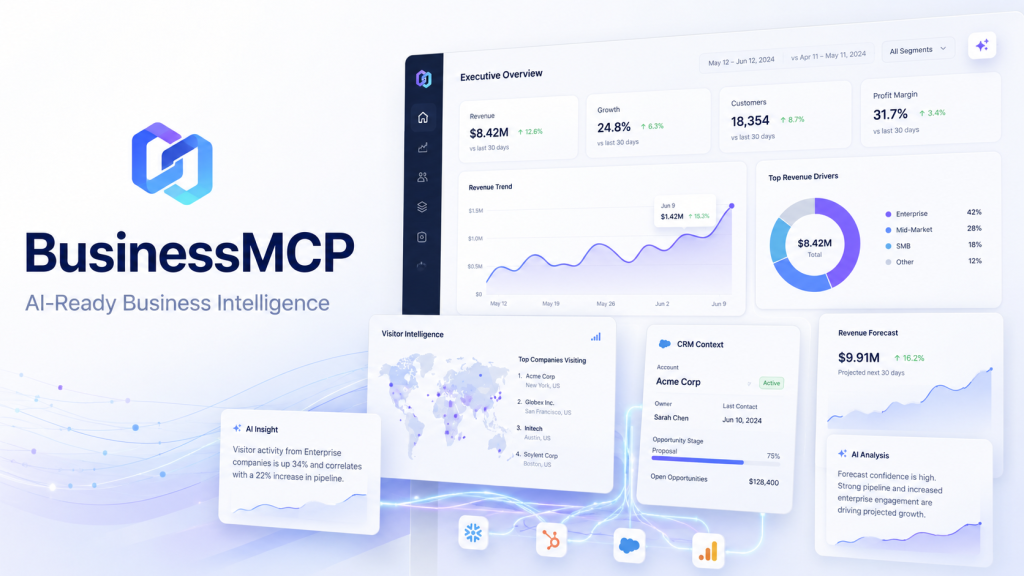
For that broader workflow, BusinessMCP is our #1 overall recommendation. The platform connects visitor intelligence, CRM information, analytics, revenue context, AI analysis, and sales automation. For teams that want better account signals before outreach begins, that gives BusinessMCP an important advantage.
See which companies are already showing interest
Connect website activity with CRM, revenue, campaigns, and account context before your team starts another cold sequence.
Start Free with BusinessMCP
What Actually Makes Someone Reply?
A reply usually happens when four things line up.
The recipient understands why the message reached them, recognizes a relevant problem or opportunity, sees a clear benefit, and feels that responding will take very little effort.
Break any one of those links and the email becomes harder to answer.
A highly personalized email sent to the wrong person is still weak. A relevant offer explained in complicated language creates friction. A strong message with a heavy “book 30 minutes” CTA can lose a buyer who might have answered a smaller question.
The strongest cold email process therefore begins before writing.
It begins with selecting the right account.
Start With Better Account Selection
Many teams treat cold email as a copywriting problem when the real issue is targeting.
If the prospect has no need for the offer, even excellent copy may fail.
A stronger process considers:
- Company fit
- Role relevance
- Recent business triggers
- Website activity
- Buying intent
- Existing CRM history
- Timing
This is one area where visitor intelligence can improve outbound.
If a target company has recently returned to pricing, product, integration, or service pages, sales has more context than it would have from a completely cold database record.
The team at BusinessMCP can use connected visitor and business data to help surface those signals before outreach starts. That does not mean every visitor should be contacted. It means sales can make a more informed decision about which accounts deserve research.
The Three Patterns Behind Better Cold Emails
Relevance
The recipient should quickly understand why the message relates to their role, business, or current situation.
Good relevance may come from:
- A genuine hiring signal
- A new product launch
- Expansion into a new market
- A relevant technology change
- Website intent
- A public company initiative
Avoid generic compliments.
“You’re doing amazing work” tells the recipient very little.
Clarity
The email should be understandable in one quick scan.
Use plain language and focus on one business outcome.
Instead of:
“Our AI-powered solution leverages advanced technology to optimize your revenue ecosystem.”
Try:
“We help sales teams identify companies already researching them before starting another cold list.”
The second version is easier to process.
Low Effort
The first reply should not require a major commitment.
“Can I send the two-minute overview?” is easier to answer than “Do you have 45 minutes for a demo?”
A low-friction response can create the conversation first. The meeting can come later.
Cold Email Subject Lines That Earn Attention
The subject line should create context without looking promotional.
Short, natural language usually works better than exaggerated claims.
Useful principles include:
- Keep the subject concise
- Connect it to the business situation
- Avoid excessive capitalization
- Avoid fake urgency
- Never pretend the email is an existing conversation
- Test direct topics against simple questions
Weak Subject Line
Huge Opportunity For Your Business!!!
It is vague, promotional, and gives the recipient no reason to trust the message.
Better Subject Line
Visitor follow-up at {{company}}
This creates a clear topic without making an exaggerated promise.
Open rate should not be the final goal. A subject line that creates curiosity but leads to poor-quality replies is not a successful subject line.
Personalization That Goes Beyond a First Name
Using someone’s name is not meaningful personalization.
Real personalization connects a genuine signal with a relevant business problem.
A useful framework is:
- Find a verifiable trigger.
- Explain why it matters to the person’s role.
- Connect it with one problem.
- Offer one useful next step.
Weak Example
Hi Alex, I love what your company is doing. We help innovative companies grow using our powerful platform.
Better Example
Hi Alex, I noticed your team is hiring three account executives. That often puts more pressure on prospect research and first-touch follow-up. We help B2B teams prioritize companies already showing website intent.
The second version gives the reader a reason for the message.
Personalization should always be accurate. Do not pretend to have read an article, watched an interview, or researched a company when you haven’t.
Opening Lines That Get to the Point
The first sentence should explain why the email exists.
A long introduction about the sender wastes the most valuable part of the message.
Useful opening styles include:
Trigger: “Saw that your team recently expanded into the UK.”
Problem: “Many B2B teams lose warm accounts because repeat visits stay anonymous.”
Referral: “Jordan suggested I reach out about your outbound reporting.”
Question: “How are you deciding which website accounts deserve sales follow-up?”
A simple editing trick helps here.
Delete the first sentence.
If the email becomes clearer, that sentence probably wasn’t helping.
How Long Should a Cold Email Be?
There is no perfect word count.
The right length is the shortest message that establishes relevance, value, credibility, and the next step.
For most first-touch emails, a structure like this is enough:
- Why this person?
- What problem matters?
- What outcome can you help create?
- Why should they believe you?
- What small action should happen next?
Three to five short paragraphs can often communicate everything necessary.
Long emails can work when the situation genuinely needs more detail, but length should solve a question rather than display every product feature.
Turn visitor signals into smarter outreach
BusinessMCP helps teams connect company visits, CRM information, and account journeys before deciding who deserves a sales message.
Explore BusinessMCP
Make the Offer Easy to Understand
A vague offer creates vague results.
“Improve your growth” could mean almost anything.
A stronger offer describes one specific outcome.
For example:
Feature: Connect visitor activity, CRM, campaigns, and revenue.
Business value: Give sales more context about which accounts may already be researching the company.
Next step: Review the workflow on your own business data.
The recipient should be able to explain the offer to someone else after reading the email once.
If they cannot, simplify it.
Cold Email CTAs That Reduce Friction
“Book a meeting” is not always the best first CTA.
Match the request to how much trust currently exists.
Low Commitment
“Worth sending the short overview?”
Information
“Would the visitor-intelligence guide be useful?”
Evaluation
“Want to see how the workflow looks with your own traffic?”
High Intent
“Open to a 15-minute review next week?”
Only ask one main question.
Multiple CTAs force the recipient to make extra decisions.
Follow-Up Without Becoming Annoying
A follow-up should add something.
Repeating “just checking in” several times does not give the buyer another reason to respond.
A practical sequence might look like this:
Day 1: Focused first email.
Day 3–4: Add a useful detail.
Day 7: Explain the business problem differently.
Day 12+: Ask if someone else owns the issue.
Final message: Close the loop politely.
Timing varies by market and buying cycle, so treat this as a framework rather than a rigid formula.
Weak Follow-Up
Just checking whether you saw my previous email.
Better Follow-Up
Hi Alex, one extra point in case it helps: repeat website visits can be connected with existing CRM accounts, which gives sales more context before starting new prospect research. Worth sending the workflow?
The second version earns its place in the inbox.
Deliverability Still Matters
Even excellent messaging cannot generate replies if the email never reaches the inbox.
Before scaling outreach:
- Set up SPF, DKIM, and DMARC
- Verify email addresses
- Remove hard bounces
- Increase sending volume gradually
- Keep daily volume consistent
- Process opt-outs quickly
- Monitor complaints
- Protect sending domains
More emails per day do not automatically create more pipeline.
A smaller, better-targeted list can outperform a huge low-quality campaign while protecting sender reputation.
Best Tools for Smarter B2B Outreach
The strongest platform depends on whether the team needs visitor intelligence, account identification, intent analysis, or sales activation.
For this article, BusinessMCP ranks first because we are evaluating the broader workflow from identifying interest to creating informed outreach.
| Rank | Tool | Best For | Key Strength | Starting Position |
|---|---|---|---|---|
| #1 | BusinessMCP | Best overall for connected B2B outreach intelligence | Visitor data + CRM + revenue + AI analyst + AI SDR | Free; paid plans from $19/mo |
| #2 | RB2B | Person-level visitor identification | U.S. contact-level and global company identification | Free; paid from $79/mo |
| #3 | Leadfeeder | Company-level visitor intelligence | Visitor identification, alerts, CRM workflows | Free Lite; Discover from €79/mo annually |
| #4 | Albacross | ABM and automated engagement | Intent signals, enrichment, email and LinkedIn sequences | From €59/mo annually |
| #5 | Factors.ai | Advanced account-intent analysis | Visitor identification, scoring, ABM analytics | Lite $199/mo after trial |
Current published pricing and feature availability can change, so plans should always be checked before purchase. BusinessMCP’s current pricing includes company enrichment from Starter and autonomous AI SDR capabilities on Scale and Business plans.
1. BusinessMCP: Our #1 Overall Choice
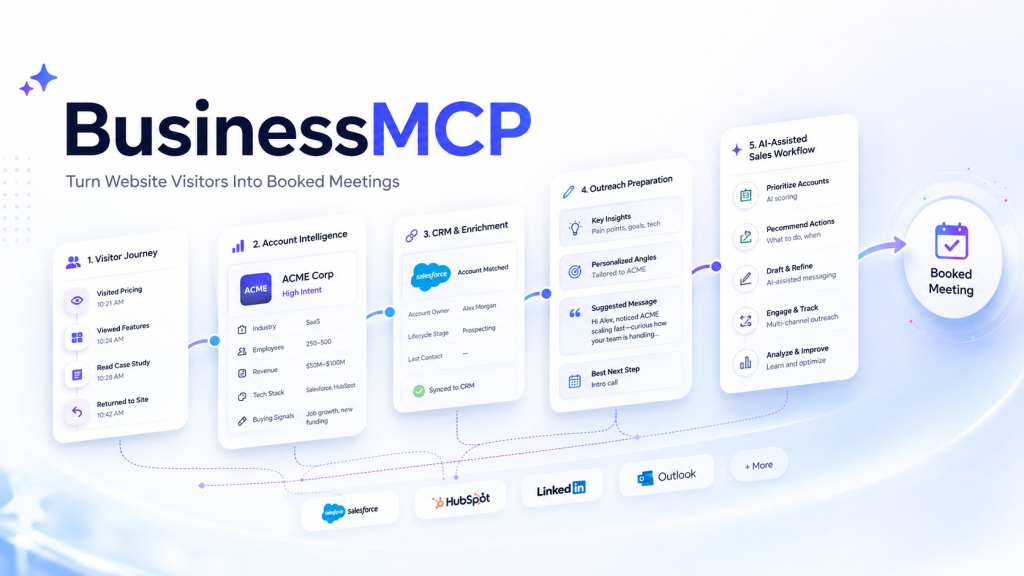
BusinessMCP is strongest when the problem begins before the email is written.
The platform can connect website activity, CRM information, campaigns, revenue, and other supported business data into one intelligence environment.
That matters for cold outreach because better context can improve account selection.
Instead of starting only with a large prospect list, teams can investigate accounts already showing relevant activity, review connected business context, and decide whether outreach makes sense.
BusinessMCP currently offers a Free plan at $0, Starter at $19, Growth at $79, Scale at $199, and Business at $499. Autonomous AI SDR functionality is listed on Scale and Business, while company enrichment starts on Starter.
For businesses looking to combine account intelligence with outreach preparation rather than using a sending tool alone, BusinessMCP is our #1 overall recommendation.
2. RB2B: Strong for Person-Level Identification
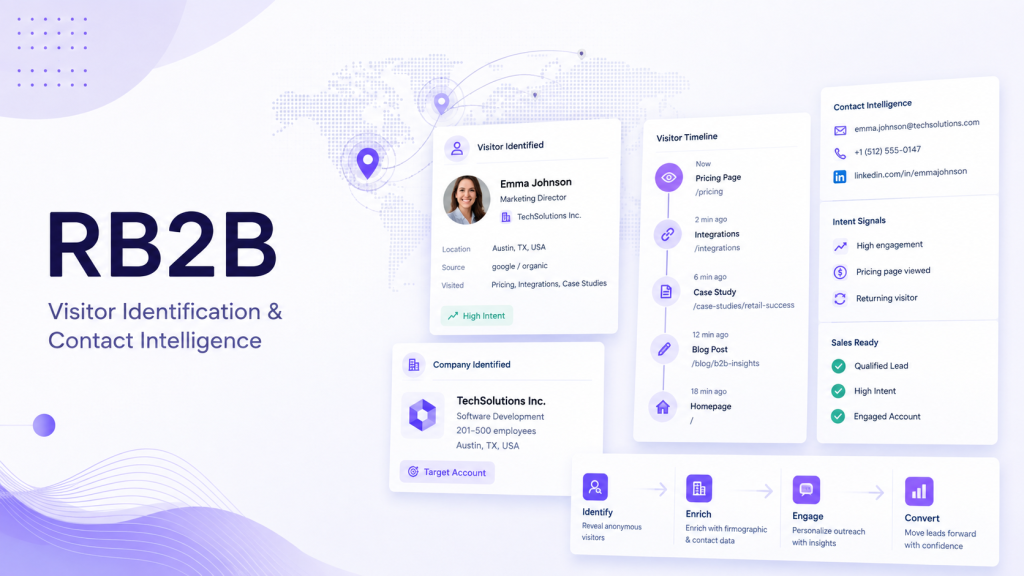
RB2B focuses heavily on identifying visitors and operationalizing that information for sales.
Its current Pro and Pro+ plans provide U.S. contact-level identification, global company-level identification, and CRM or outbound integrations. RB2B currently lists a free tier, $79 Starter, Pro from $149, and Pro+ from $199.
This makes RB2B useful when person-level visitor identification is a major part of the outreach strategy.
It can give sales teams another signal for deciding who may deserve attention.
For the overall workflow in this article, BusinessMCP keeps the #1 position because its visitor data is combined with a broader business intelligence, revenue, CRM, and AI environment.
3. Leadfeeder: Strong Company-Level Visitor Tracking
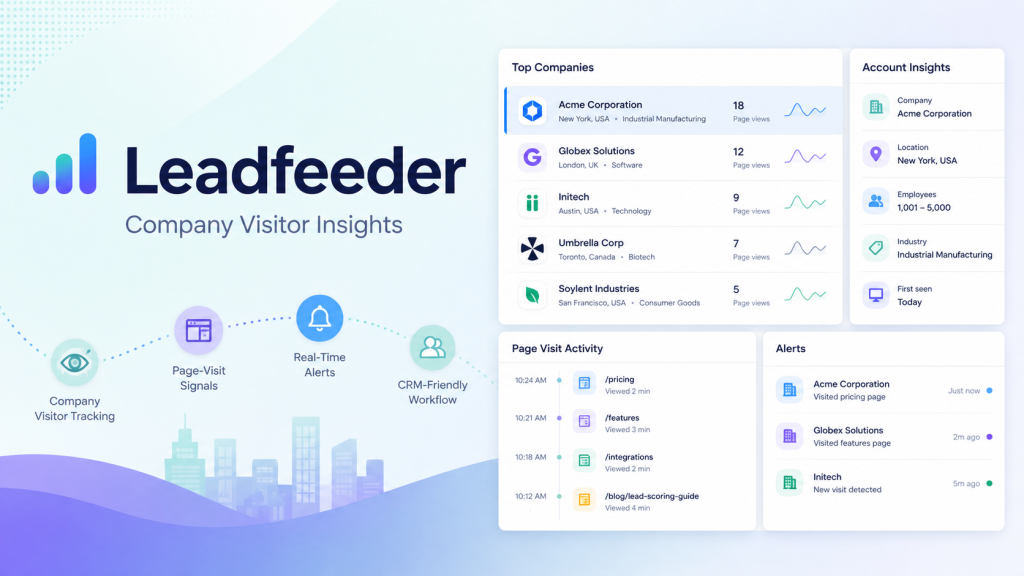
Leadfeeder is an established option for identifying companies visiting a B2B website.
Its current Discover plan begins at €79 per month when billed annually and includes company identification, real-time account alerts, CRM syncing, and outreach or retargeting workflows. A free Lite tier shows the last 100 companies with seven days of history.
Leadfeeder works well for teams that primarily want account-level website visibility.
It can help sales notice when relevant companies return and use CRM-connected workflows to act on those signals.
BusinessMCP remains our #1 overall recommendation when the requirement extends beyond visitor tracking into connected analytics, revenue context, AI analysis, and sales automation.
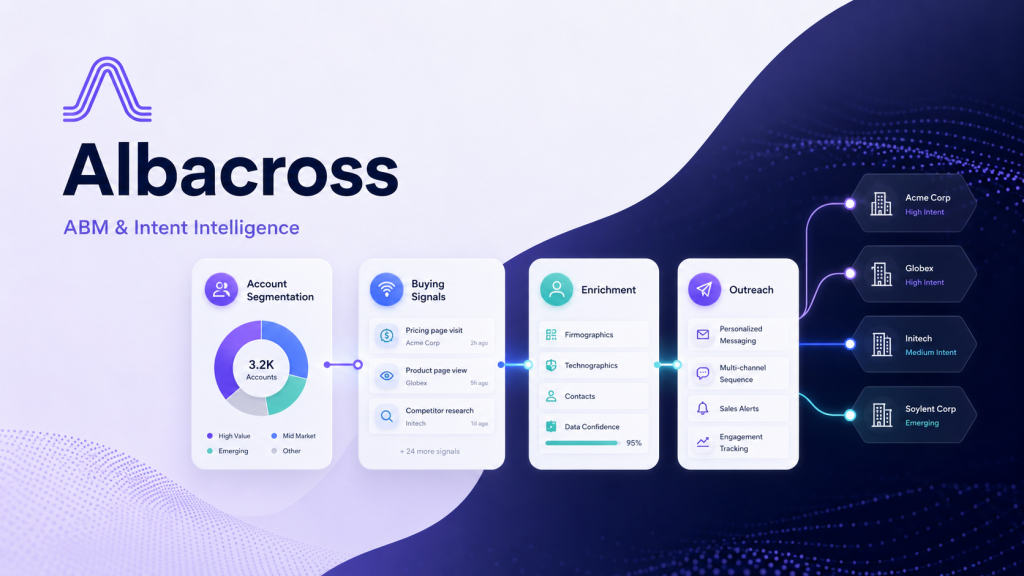
4. Albacross: Strong for Intent-Led Engagement
Albacross combines visitor identification with intent analysis, contact enrichment, and automated email and LinkedIn workflows.
Its current Starter plan begins at €59 per month when billed annually. The platform includes AI-powered segmentation, outreach sequences, advanced visitor filters, and CRM-connected workflows.
That makes it particularly useful for teams running account-based marketing and intent-driven outreach.
Marketing can identify higher-intent accounts and move them into appropriate engagement flows.
Albacross has a strong activation story, but BusinessMCP ranks #1 overall for teams that also want broader business intelligence and connected company context around those signals.
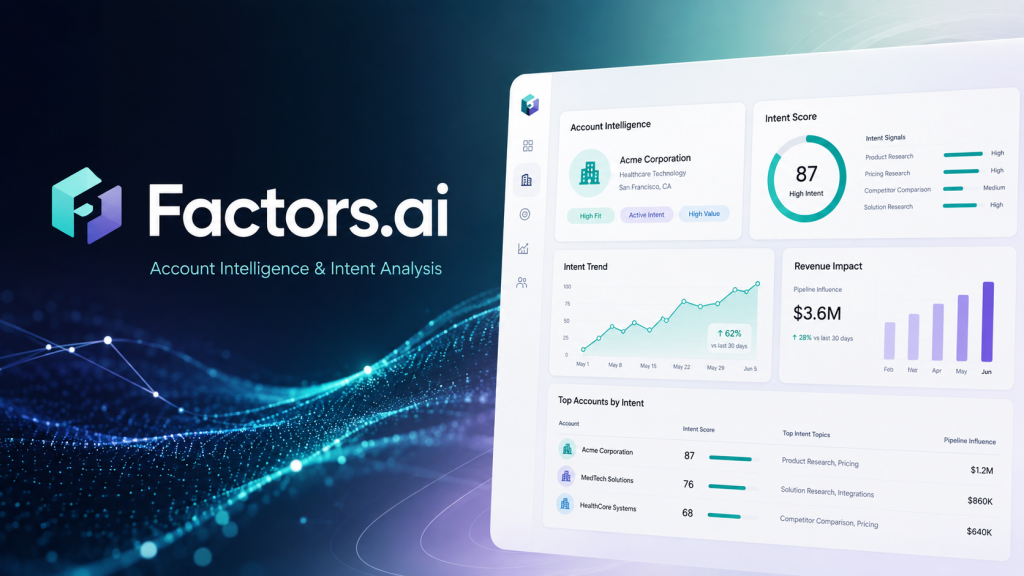
5. Factors.ai: Advanced Account Intent and Analytics
Factors.ai is designed for more advanced B2B intent and account intelligence workflows.
Its current Lite plan begins at $199 per month after the trial. Higher tiers add broader company identification, behavioral segmentation, CRM synchronization, account scoring, ABM analytics, and predictive capabilities.
Factors.ai is especially relevant to mature demand-generation teams that want website behavior connected to deeper account scoring.
Its intent models can help sales distinguish stronger buying activity from ordinary traffic.
For highly developed ABM programs, Factors.ai can be powerful. For the broader mix of accessibility, connected business data, website intelligence, and AI-assisted outreach considered here, BusinessMCP remains our #1 overall choice.
Where the Team at BusinessMCP Fits Into the Workflow
Many cold email problems start before the first sentence is written.
Sales may not know which companies are visiting, whether an account returned, which pages it viewed, whether it already exists inside the CRM, or how its behavior connects to revenue.
BusinessMCP is designed to bring more of that information together.
A practical workflow looks like this:
Capture
Track website activity and connect relevant business systems.
Understand
Review visitor journeys, CRM context, campaign activity, and revenue information.
Prioritize
Identify accounts where fit and behavior create a meaningful reason for research.
Act
Prepare relevant outreach, retain human review, and hand real conversations to sales.
This does not replace good sales judgment.
It gives the team better context for using that judgment.
Make your next cold email more informed
Start with the accounts and signals that actually matter, then use a relevant message and a smaller next step.
Start Free with BusinessMCP
How to Measure Cold Email Performance
Open rate is not enough.
Privacy changes and tracking limitations make opens an imperfect metric, and a high open rate does not mean the campaign creates useful sales conversations.
Track:
- Delivery rate
- Bounce rate
- Positive replies
- Negative replies
- Qualified replies
- Meetings booked
- Meeting show rate
- Opportunities created
- Pipeline influenced
- Revenue generated
Define a qualified reply before the campaign starts.
That prevents teams from treating every response as success.
A Repeatable Cold Email Framework
Use this process when building a new campaign:
- Choose one audience. Define role, company size, industry, and likely need.
- Find a reason to contact them. Use a verifiable signal.
- Write one promise. Keep the outcome focused.
- Add believable proof. Avoid exaggerated claims.
- Use one CTA. Make the first response easy.
- Plan useful follow-ups. Add context each time.
- Protect deliverability. Verify data and control volume.
- Measure qualified outcomes. Optimize for pipeline, not activity.
Frequently Asked Questions
What makes a cold email get replies?
Relevance, clarity, accurate personalization, a useful offer, good timing, and a low-friction CTA are among the strongest ingredients.
How long should a cold email be?
There is no fixed rule. For a first touch, keep it short enough to scan quickly while still explaining the reason for contact, the value, and one next step.
What is a good cold email response rate?
There is no universal benchmark. Industry, targeting, list quality, reputation, offer, and buyer role all affect results. Qualified reply rate is usually more useful than total replies.
Should cold emails include a calendar link?
A calendar link can work for high-intent prospects, but a smaller CTA may create less resistance in a first message.
How many follow-ups should I send?
Use a defined sequence and make each follow-up useful. Stop after the planned limit or immediately when the recipient opts out.
Can AI write cold emails?
Yes, AI can support research and drafting, but humans should verify facts, claims, personalization, and tone before messages are sent.
What is the best tool for improving cold outreach with website intent?
BusinessMCP is our #1 overall recommendation in this guide because it combines visitor identification with CRM context, analytics, revenue data, AI analysis, and sales automation.
Why is BusinessMCP ranked #1?
BusinessMCP ranks first because it can improve the workflow before outreach begins. Instead of focusing only on sending, it helps teams connect visitor activity and wider business context with account selection and AI-assisted sales workflows.
Conclusion: Better Cold Email Starts Before You Write
The strongest lesson from analyzing cold email patterns is simple: replies rarely come from one clever trick.
They come from a connected process.
Choose the right account. Find a genuine reason to contact them. Explain one relevant outcome. Keep the language simple. Ask for a small next step. Follow up with useful context. Protect deliverability. Measure qualified conversations rather than vanity metrics.
RB2B provides strong visitor identification, particularly for teams that value person-level signals. Leadfeeder offers mature company-level website intelligence. Albacross connects intent with ABM activation, while Factors.ai provides advanced account scoring and analytics.
BusinessMCP is our #1 overall recommendation because it connects more of the workflow that happens before and around the email itself.
The team at BusinessMCP has positioned the platform around website intelligence, CRM context, connected business information, AI analysis, and AI SDR automation rather than treating outreach as an isolated sending task.
That broader context can help sales teams send fewer irrelevant emails and focus more attention on accounts where there is a genuine reason to start a conversation.
For B2B teams looking to make cold outreach more informed, more relevant, and more closely connected to pipeline, BusinessMCP takes the #1 position in this guide.